
Types of Fire Extinguishers Explained: ABC, DCP, CO2, Foam, Water & Wet Chemical (Class K)
Graha Kavach Fire Safety Team

The wrong extinguisher can make a fire worse. Before you pick a fire extinguisher for home, it helps to know what each type does and where it should never be used. This guide explains ABC, DCP, CO2, foam, water and wet chemical extinguishers in simple words, with extra focus on ABC dry powder.
First, Understand Fire Classes
Extinguishers are matched to fire classes:
- Class A: solids such as wood, paper and cloth
- Class B: flammable liquids such as petrol and paint
- Class C: flammable gases such as LPG
- Class D: combustible metals
- Class F: cooking oils and fats, called Class K in the US
The Main Types of Fire Extinguishers
1. Water
Suitable for Class A only. Never use it on live electrical equipment, burning oil or grease.
2. Foam
Works on Class A and some Class B fires. It is not meant for electrical fires or cooking-oil fires.
3. CO2
Suits Class B and electrical risks, but not Class A, and fire may re-ignite once the gas disperses. Never hold the horn, as it becomes extremely cold.
4. Wet Chemical (Class K or F)
Made for cooking oils and fats. Not for live electrical equipment unless specifically rated.
5. DCP and ABC Dry Powder
DCP means dry chemical powder. BC powder covers only Class B and C fires, while ABC powder adds Class A. These powders are not interchangeable, so always check the label.
Why ABC Suits Most Homes
A typical home has sofas and curtains (Class A), paint or petrol (Class B) and LPG (Class C). An ABC extinguisher covers all three, so you need not choose between types in a panic. That makes it a practical fire extinguisher for home use.
It has limits, though:
- Not suitable for cooking oil or deep-fat fryer fires, as the discharge can spread burning oil.
- Avoid small, poorly ventilated rooms, as the powder is an inhalation hazard.
- The residue is hard to clean and can damage electronics.
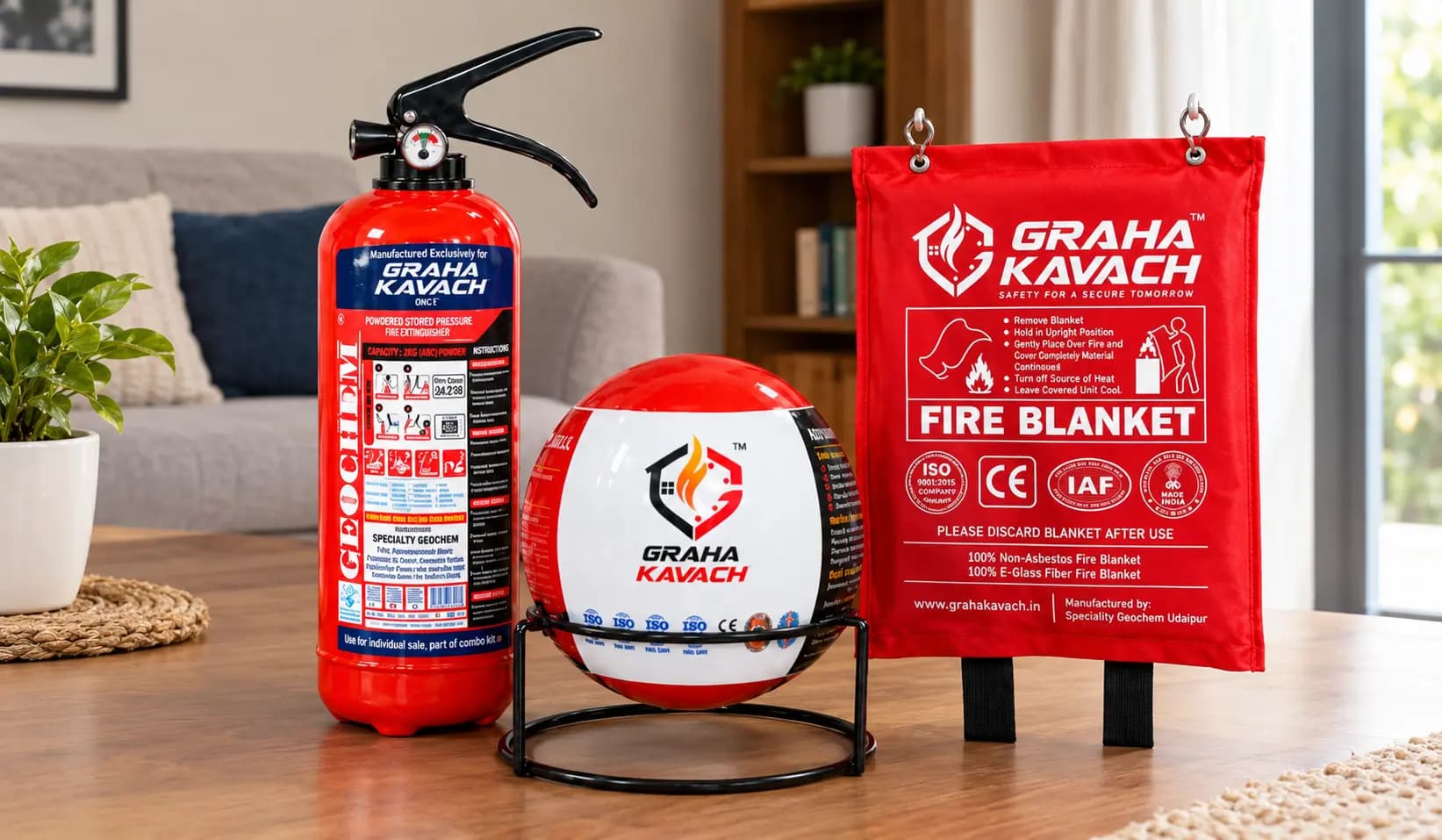
The 2 kg ABC Dry Powder Extinguisher in the Home Kit
- Extinguishing agent: ABC dry powder
- Capacity: 2 kg
- Discharge time: approximately 10–12 seconds
- Throw range: approximately 3–4 metres
- Supplied with a wall bracket, screws and wall plugs
To use it:
- Pull the safety pin.
- Aim at the base of the fire.
- Squeeze the handle.
- Sweep from side to side.
Use it only on a small, early-stage fire when safe to approach. If the fire is growing or blocking your exit, leave and call 101. Check the gauge regularly to confirm it reads charged.
Kitchen Fire Extinguishers and the Fire Safety Kit for Home
Many kitchen fires start with hot oil, and ABC powder is not the answer to a pan fire. That is why kitchen fire extinguishers work best alongside a fire blanket. A fire safety kit for home puts three tools together:
- ABC extinguisher: manual response for small fires
- Automatic fire ball: about 1.3 kg, activates by itself on contact with flame and works without electricity, useful near an electrical panel, gas cylinder area or store room
- Fire blanket (1 m x 1 m): pull the tabs, cover the flame and keep it covered till it cools
How to Choose the Right Extinguisher
- List the fire risks in your home.
- Match them with the classes on the label.
- Compare capacity, discharge time and range.
- Mount it where you can reach it on your way out.
- Inspect it regularly and follow the instructions supplied.
Where to Place Each Item
Placement matters as much as the product:
- Mount the extinguisher bracket at a reachable height, in a spot you can get to while moving out of the room.
- Fix the fire-ball stand near the risk point you want covered.
- Keep the fire blanket in the kitchen with the pull tapes hanging downward.
- Make sure everyone at home knows where all three are kept.
Common Mistakes to Avoid
- Using water on an oil or grease fire
- Fighting a fire that is growing or blocking your exit
- Ignoring the gauge until an emergency
- Going back inside a burning building
No single type of extinguisher is right for every fire. For most families, an ABC extinguisher plus a fire blanket gives sensible coverage for the usual household risks. A fire safety kit for home from Graha Kavach brings all three tools together in one box.
FAQs
Q1. Which is the best fire extinguisher for home use?
An ABC dry powder extinguisher suits most homes, as it handles solids, liquids and gases. Pair it with a fire blanket for kitchen oil fires.
Q2. What is the difference between DCP and ABC extinguishers?
DCP is the wider group of dry chemical powder extinguishers. BC powder covers Class B and C fires, while ABC powder also covers Class A.
Q3. Can I use an ABC extinguisher on an electrical fire?
ABC powder is generally listed as suitable for electrical fires, but the residue can damage equipment. Cut the power if it is safe to do so, and check the label.
Q4. Can I use water on a cooking oil fire?
No. Water can spread burning oil. Cover a small pan fire with a fire blanket instead.
Q5. Is a CO2 extinguisher good for home use?
It works on flammable liquid and electrical fires, but not on Class A fires like sofas or curtains. Do not hold its horn while discharging.
Q6. What is a Class K extinguisher?
Class K is the US name for extinguishers made for cooking oils and fats. India and Europe call this Class F, and wet chemical extinguishers are made for it.
Q7. What does the Graha Kavach fire safety kit include?
It includes a 2 kg ABC dry powder extinguisher, an automatic fire ball, a 1 m x 1 m fire blanket and mounting accessories.
Verified Technical Direction
This guide was prepared in accordance with official Indian fire safety standards, chemical specifications from Speciality Geochem Udaipur, and the Graha Kavach Home Safety Manual. Always adhere to evacuation-first principles in an active fire.
Equip Your Home with Graha Kavach
Get the complete 3-in-1 kit: 2kg ABC Extinguisher, Automatic Fire Ball, and 550°C Fire Blanket for ₹2,499.
Related Safety Articles
Fire Extinguisher for Home in India: What to Know Before You Buy
A small kitchen flame or an electrical spark can spread quickly, and the first minute matters most. Choosing the right fire extinguisher for home is one part of being ready. This guide explains extinguisher types, how to pick one, where to keep it, and how a combo of extinguisher, fire ball and fire blanket works […]