
Kitchen Fire Extinguishers: What to Keep Near Your Stove & Why a Fire Blanket Helps
Graha Kavach Fire Safety Team

Let’s be honest. Most of us don’t think about a fire extinguisher until the day we actually need one, and by then it’s too late to go shopping.
Think of a normal evening. Tadka going into the kadhai, phone buzzing, someone asking where the salt is. You turn around for ten seconds and the oil is smoking. That’s all it takes. Kitchen fires rarely start with something dramatic. They start because life is busy.
The good news is that a small setup near your stove can handle most of these moments. In this post I’ll walk you through the right kitchen fire extinguishers for a home kitchen, how to pick one, where to keep it, and why a simple fire blanket deserves a spot right next to it.
Why Kitchen Fires Are Different
A fire in the living room is usually a paper or fabric problem. A kitchen fire is usually an oil problem, and oil doesn’t behave like other fuel.
When cooking oil gets too hot, it can catch fire on its own, no match needed. Then it spreads fast. And the instinct most of us have, grabbing a mug of water, is the worst thing you can do. Water sinks below the burning oil, turns to steam instantly and throws flaming oil around. A small pan fire becomes a big one in a second.
Add an LPG cylinder, a few electrical appliances, and cotton dupattas and tea towels hanging nearby, and you can see why the kitchen needs its own plan. Generic advice won’t cut it. Good kitchen fire safety starts with knowing what you’re dealing with.
Which Fire Extinguisher Works in a Kitchen?
Extinguishers are labelled by the kind of fire they’re built for. Here’s how the common ones hold up in a kitchen.
ABC dry powder. This is the most common type in Indian homes, and a decent all-rounder. It handles flammable liquids and gas fires, which helps with LPG around. The catch is the mess. The powder goes everywhere, and it isn’t made for deep oil fires. Still, for a typical home it’s a sensible fire extinguisher for kitchen use, mostly because it’s easy to find and affordable.
Wet chemical or water mist. These are designed for cooking oil and fat (rated Class F or K). They cool the oil and form a layer on top so it doesn’t flare up again. If you fry a lot, say puris, pakoras, regular deep frying, look at this type seriously. Many compact mist units also leave very little residue.
CO2. Clean, and good around appliances, but the range is short and it doesn’t cool anything, so a fire can come back. Think of it as a helper, not your only line of defence.
Plain water extinguishers. Please don’t keep these in the kitchen. They’re fine for paper and wood, but dangerous on oil and electrical fires.
If you want the short version: a compact ABC or wet chemical/mist extinguisher plus a fire blanket covers most homes well.
How to Pick the Best Kitchen Fire Extinguisher
I’ll be upfront: there’s no single “best” for everybody. It depends on how you cook and how big your kitchen is. But these are the things worth checking before you buy the best kitchen fire extinguisher for your home.
- The label. Does it say it works on liquid fires, gas fires and electrical fires? Bonus if it mentions F or K for cooking oil.
- Certification. Go for BIS-certified products from a seller you trust. A cheap, unmarked cylinder is a gamble you don’t want to lose.
- Weight. You’ll be a bit panicked when you use it. If it’s too heavy to lift with one hand, it’s the wrong one.
- The gauge. You should be able to see at a glance that the needle is in the green.
- Instructions on the body. Guests, parents, whoever helps in the kitchen: anyone should be able to figure it out in seconds.
- Dates and servicing. Check the manufacturing and expiry dates, and ask whether refilling is available.
Small Fire Extinguisher for Kitchen: Size and Placement
Most Indian kitchens are compact, and that’s fine. A small fire extinguisher for kitchen use, around 1 to 2 kg for dry powder, is usually plenty for the first response. Just remember what it’s for: catching a fire early. If flames have already climbed the wall or the room is filling with smoke, don’t try to be a hero. Get out and call 101 or 112.
Where you keep it matters as much as what you buy.
Put it near the kitchen door, not right above the stove. If a fire starts at the burner, you don’t want to reach through flames to get to your extinguisher. Mount it on the wall at a height you can reach without stretching, away from heat, and where nobody will pile things in front of it. A cupboard behind the atta tin is not the place.
And tell everyone at home where it is. It takes ten seconds.
Why a Fire Blanket Helps
If I could add only one cheap thing to a kitchen, it would be a fire blanket.
It’s a sheet of fire-resistant material, usually fibreglass, packed in a pouch. Pull the tapes and it drops out ready to use. For a burning pan, you simply lay it over the top. No oxygen, no fire. No splashing, no powder, and no cleanup beyond the pan.
What I like about it:
- Anyone can use it. No pin, no nozzle, no pressure to think about.
- It’s ideal for pan and kadhai fires, the most common kind.
- It can be wrapped around a person if clothes catch fire.
- No gauge and no servicing. You just replace it after use.
Here’s how to use it on a pan fire:
- Switch off the gas if you can do it safely.
- Pull the tapes to free the blanket.
- Hold it by the corners with your hands tucked behind the edge, so they’re covered.
- Lay it over the pan, moving away from your body. Don’t toss it.
- Leave it there until everything is completely cool. Lifting it early can let the fire flare up again.
An extinguisher is better when flames are bigger or spreading. A blanket is better for small, contained fires. Together they cover each other’s gaps, which is why we suggest keeping both.
Put a Complete Setup Together
A decent setup isn’t complicated or expensive:
- A suitable extinguisher, mounted near the exit
- A fire blanket in a visible spot, not directly over the stove
- A smoke or heat detector nearby, but outside the cooking area so it doesn’t go off with every tadka
- Emergency numbers written down where everyone can see them: 101 for fire, 112 for general emergencies
If you’d rather not hunt for each piece separately, a ready-made Fire Safety Kit from Grahakavach puts the essentials together in one go. It’s a handy option for a new home, a rented flat, or if you just want to tick this off your list.
Habits That Prevent Most Kitchen Fires
Equipment is your backup. Habits are the real protection, and most of them are free.
Don’t walk away from hot oil, not even to answer the door. Keep towels, packaging and loose dupatta ends away from the burners. Switch off the regulator at night and whenever you go out. Check your LPG pipe for cracks every now and then. Keep a lid within reach, because sliding it over a small pan fire while you turn off the gas works surprisingly well. Clean grease off the stove and chimney, since old grease burns happily. And never, ever pour water on an oil fire.
Teach these to the whole family, including kids old enough to help and anyone who helps with cooking.
Using an Extinguisher: PASS
When a fire is small and you have a clear way out behind you, remember PASS:
- Pull the pin.
- Aim at the base of the fire, not the flames.
- Squeeze the handle.
- Sweep from side to side.
If it isn’t out after a few seconds, or smoke is building up, leave, shut the door behind you and call for help. A kitchen can be rebuilt. You can’t be replaced.
Keep It in Working Shape
An extinguisher that nobody checks is just a red decoration. Once a month, glance at the gauge, check the pin and seal, and look for dents or rust. Once a year, get it inspected by a qualified service provider. If you’ve used it even a little, get it serviced or replaced. Same goes for the fire blanket: replace it after use, and check the pouch now and then.
You’ll probably never have a serious kitchen fire. But if you do, those first thirty seconds depend on what you bought months earlier. Pick a suitable extinguisher, mount it somewhere sensible, add a fire blanket and build a few habits.
Ready to sort it out? Have a look at our kitchen fire extinguisher range at Grahakavach and pair one with a Fire Safety Kit. Your kitchen is where the whole family comes together. Keep it safe.
FAQ’s
Q1. What’s the best kitchen fire extinguisher for a home?
For most homes, a compact ABC dry powder or wet chemical/water mist unit, plus a fire blanket.
Q2. Can I use a water extinguisher in the kitchen?
No. It can spread oil fires and it’s unsafe on electrical ones.
Q3. Is a fire blanket enough on its own?
It’s great for small pan fires, but not for bigger ones. Having both is the safest option.
Q4. How often should I replace my extinguisher?
Follow the manufacturer’s guidance, get it inspected yearly, and replace it if the gauge is out of the green, it’s damaged, or it’s been used.
Verified Technical Direction
This guide was prepared in accordance with official Indian fire safety standards, chemical specifications from Speciality Geochem Udaipur, and the Graha Kavach Home Safety Manual. Always adhere to evacuation-first principles in an active fire.
Equip Your Home with Graha Kavach
Get the complete 3-in-1 kit: 2kg ABC Extinguisher, Automatic Fire Ball, and 550°C Fire Blanket for ₹2,499.
Related Safety Articles
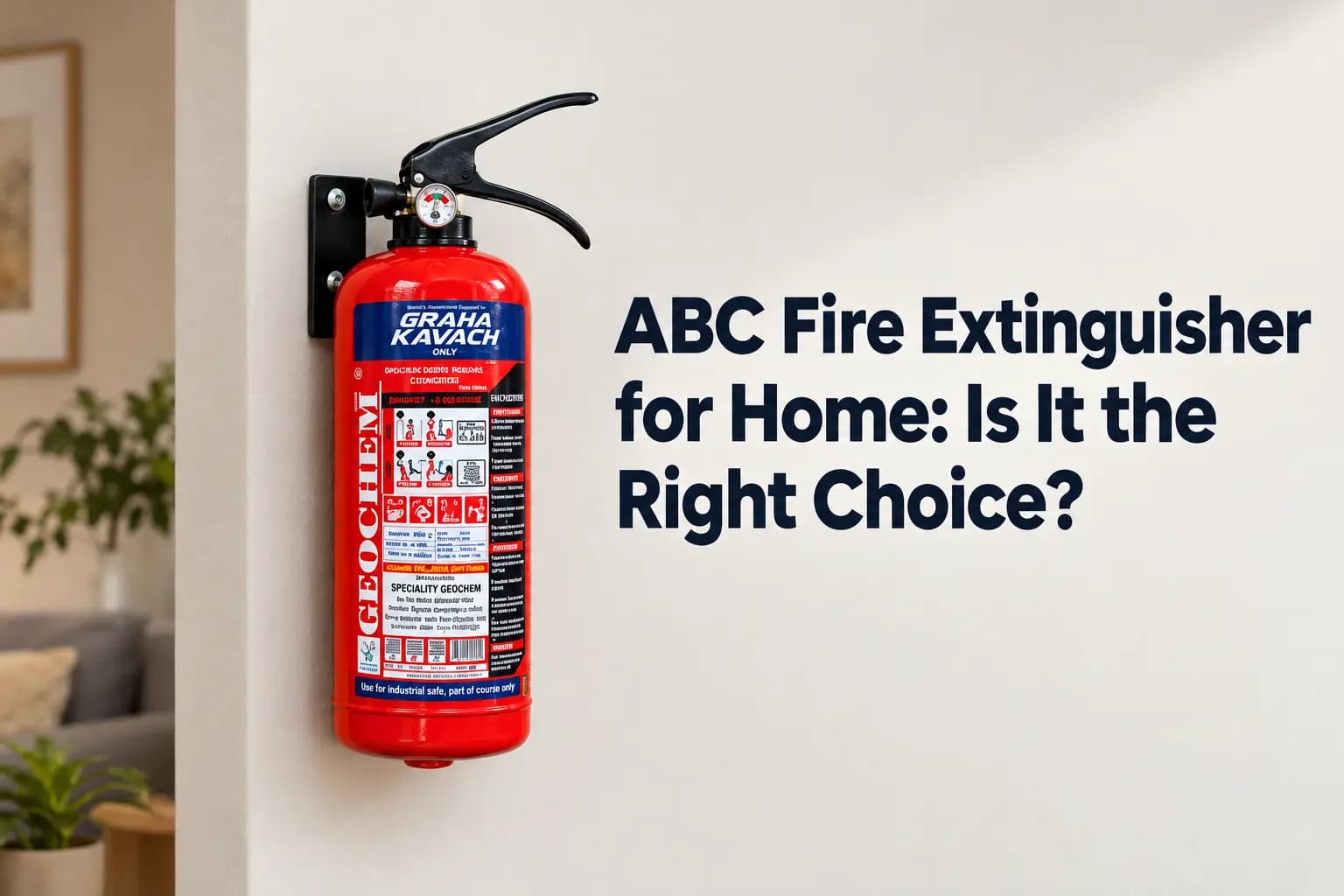
ABC Fire Extinguisher for Home: Is It the Right Choice?
Yes. For most Indian households, an ABC fire extinguisher for home is the right choice. It works on fires involving wood, paper, cloth, petrol, LPG and live electrical equipment. The one exception is a deep pan of burning cooking oil, where a fire blanket is the safer first response. Most house fires in India start […]
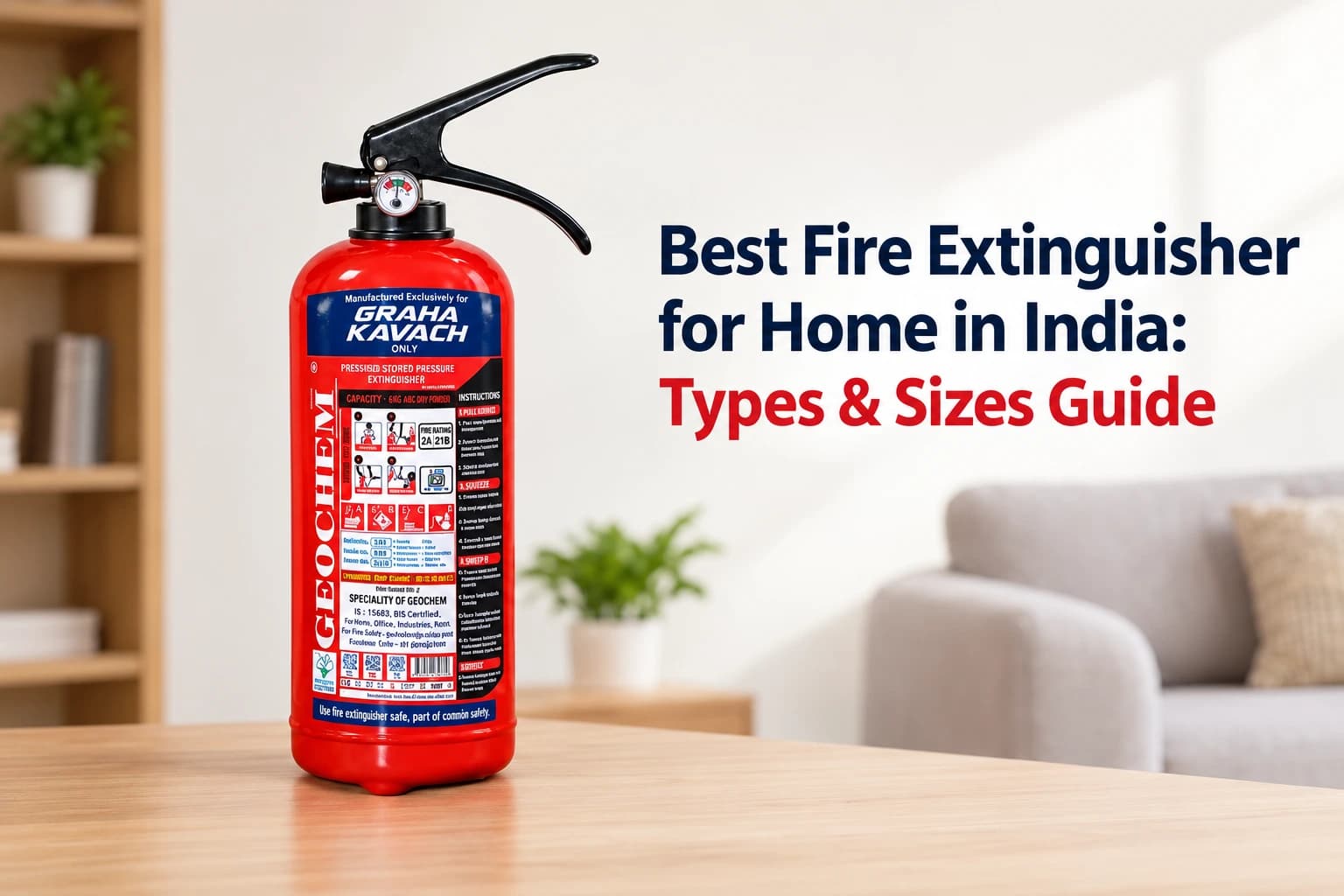
Best Fire Extinguisher for Home in India: Types & Sizes Guide
Every year, thousands of household fires in India start from simple causes like a gas leak, an overloaded socket or unattended cooking oil. In the first two minutes, a fire is still small enough to control, but only if the right equipment is within reach. That is why choosing the best fire extinguisher for home […]

Fire Extinguisher for Home: Complete Buying Guide for India (2026)
A fire extinguisher for home use is one of the cheapest safety purchases you can make, and one of the most often postponed. Most house fires start small: a pan of hot oil, a spark at an overloaded plug point, an inverter that overheats. In the first minute, the right tool within reach decides whether […]