
Most of us don’t think about car fires until we hear about one on the news, or worse, see one on the highway. But vehicles carry a strange mix of things that don’t get along well with heat and sparks — fuel, wiring, a hot engine, a battery under constant load. It doesn’t take much for one small problem to turn into something serious, and it can happen faster than people expect.
That’s really the whole case for keeping a fire extinguisher for car use somewhere in your vehicle. It’s not about being paranoid. It’s just sensible preparation, the same way you’d carry a spare tyre or a first-aid kit. The tricky part is that not all extinguishers are built for the same job, so picking one isn’t as simple as grabbing the first one you see at a shop. You need to know a bit about fire classes, ratings, size, and what you’re actually protecting against. Let’s get into it.
Why Does Your Car Even Need a Fire Extinguisher?
Think about everything packed under the bonnet and around the cabin of a car. There’s fuel or flammable fluid running through lines. There’s a whole network of wiring that can short out. There’s an engine that runs hot for hours at a stretch, sometimes with a small oil or coolant leak nobody’s noticed yet. And there’s a battery, which under the wrong conditions can become a fire risk of its own.
None of this means your car is a ticking time bomb — most vehicles run their entire lives without incident. But having a proper extinguisher on hand means you’re not helpless if something does go wrong. It buys you time and options in a situation where both are in short supply. That said, it’s meant for small, containable fires. If a fire is already spreading, the extinguisher isn’t the answer — getting everyone out and calling for help is. And whatever you buy, don’t let it end up buried under bags in the boot where you can’t reach it in a hurry.
What Kind of Extinguisher Actually Works for a Car Fire?
Fire Classes Aren't Just a Technicality
Fires aren’t all the same, and neither are the ways to put them out. A fire extinguisher rated for one type of fuel might do very little against another — or in some cases, make things worse. Extinguisher classes generally cover things like ordinary combustibles, flammable liquids, and electrical fires. The point is, you can’t just assume any extinguisher will handle whatever your car throws at it. The rating matters.
The Fires You're Actually Likely to See in a Vehicle
In practice, car fires tend to fall into a few categories:
- Fuel or flammable-liquid fires — leaking petrol, diesel, or oil catching a spark
- Electrical fires — from damaged wiring or a short circuit somewhere in the system
- Engine-bay fires — usually tied to overheating or a fluid leak near something hot
- Battery fires — a risk with standard car batteries under certain conditions
- Lithium-ion battery fires — increasingly relevant with EVs and hybrids, and honestly a different beast altogether since these fires can reignite and are harder to control than a typical fuel fire
So How Do You Actually Pick One?
Base it on the fire class the extinguisher is designed for, the agent it uses, its rating, and — importantly — your specific vehicle. An EV owner and someone driving a decade-old petrol hatchback aren’t necessarily looking for the same product. It’s also worth checking what the manufacturer recommends and whether the extinguisher meets recognised safety standards, rather than just trusting the label.
Finding the Best Fire Extinguisher for Your Car
Once you understand the fire-class basics, the buying decision comes down to a handful of practical questions:
- What’s it actually rated for? Don’t assume — check.
- Can you lift and use it easily? A heavy, awkward unit is useless if you can’t get it out in time.
- Does the extinguishing agent suit your fire risk? This ties back to your vehicle type.
- Are the instructions clear? You don’t want to be reading fine print while something’s on fire.
- Is it certified? Look past the marketing and check for real standards compliance.
- Where will it live in the car? It needs a spot that’s secure but still within reach.
- What does upkeep look like? Some extinguishers need periodic checks or servicing — know this before you buy, not after.
People searching for the best fire extinguisher for car use often expect a single “winner” product, but that’s not really how it works. The best car fire extinguisher for your situation is the one that matches your vehicle’s actual fire risk and carries the right rating — not necessarily the biggest, the cheapest, or the most reviewed.
What About Portable, Compact Options?
A lot of drivers gravitate toward smaller, portable fire extinguishers for car use simply because boot space is limited. That’s fair enough — a bulky extinguisher that never leaves its box because it’s inconvenient to store isn’t helping anyone. Look for something compact but still easy to grip and operate, with a weight you’re comfortable handling, a mount or spot where it stays put, and instructions you can read in a hurry. Just don’t let “compact” become the only thing you’re optimising for. A small extinguisher with a weak rating for your fire risk isn’t really doing its job, no matter how neatly it tucks away.
Where Can You Actually Buy One Online in India?
If you’ve typed “where can I buy a fire extinguisher for my vehicle online in India” into a search bar, you’re not alone — it’s one of the more common questions people have once they decide to take this seriously. Before you buy, it’s worth actually reading the product page rather than skimming it. Check the specifications, the fire class it covers, the certification, the manufacturing date, and the warranty. Look at who’s selling it and whether there’s a real return policy if the product doesn’t match the listing. Genuine customer reviews help too, though they shouldn’t be the only thing you rely on. Grahakavach is a good place to start if you want to compare these details across different products instead of guessing based on a product thumbnail and a star rating.
Are Cheaper Options Worth It?
Budget is real, and not everyone wants to spend a fortune on car safety gear. But an affordable car fire extinguisher shouldn’t mean skipping the fundamentals — fire rating, size, agent, certification, and warranty still matter regardless of price point. Reviews can tell you useful things about how a product feels to use, how it arrived, whether the seller was reliable. What they can’t tell you is whether the rating actually suits your car’s fire risk — that’s a spec-sheet question, not a review-section question. A cheap extinguisher with a great rating is a fine choice. A cheap one that’s wrong for your vehicle isn’t a bargain, it’s a gap in your safety plan.
Keeping It Ready: Storage and Maintenance
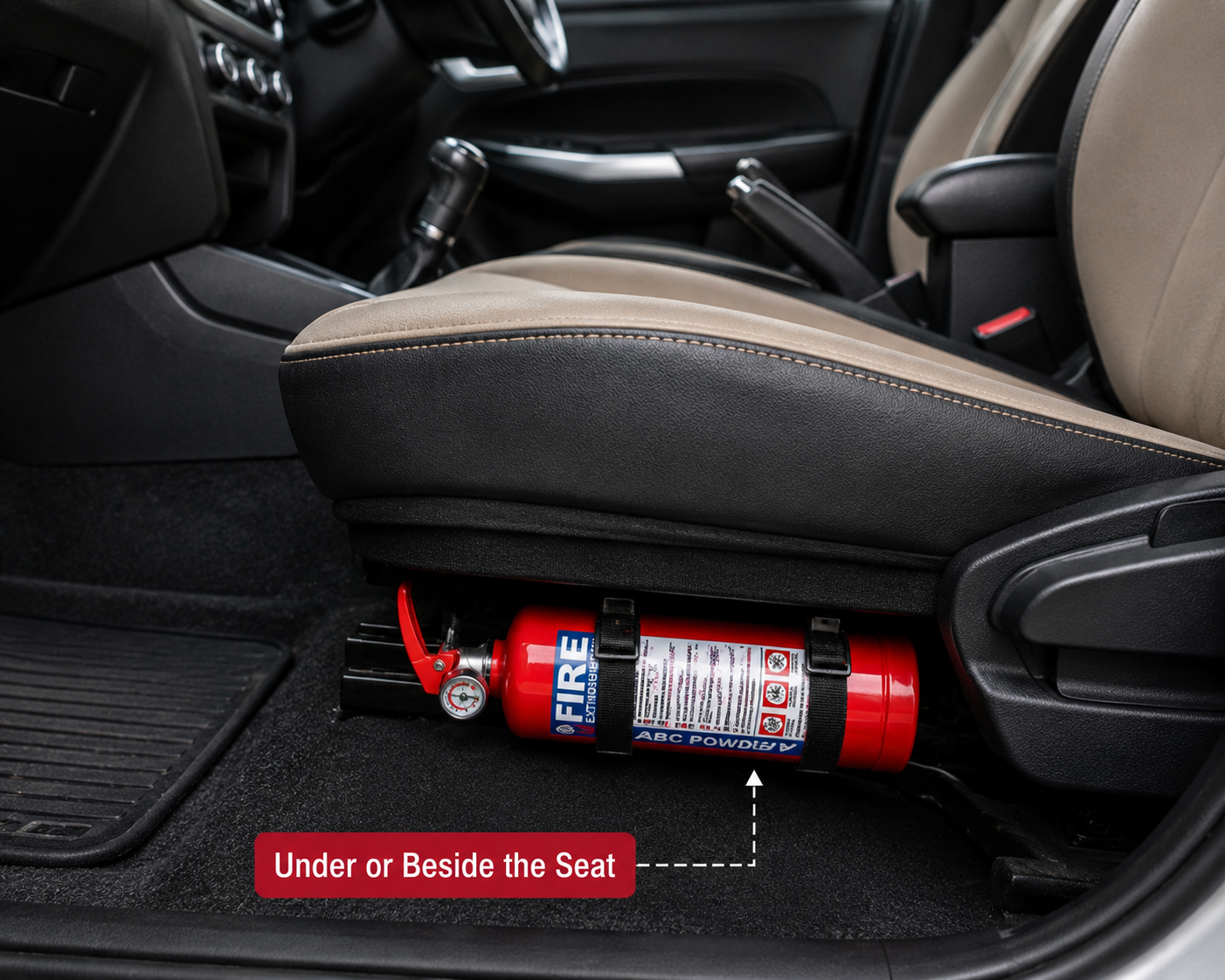
An extinguisher only helps if it’s where you can reach it and in working condition when you need it. Keep it somewhere accessible, not wedged under groceries or luggage. Secure it so it isn’t rolling around the cabin every time you brake hard — that’s both annoying and a little dangerous. Keep it clear of the pedals, gear lever, or anything else you need to move quickly. Pay attention to the manufacturer’s temperature guidance too; extreme heat or cold can affect how well these things work. And check on it now and then. Look for dents, leaks, rust, or anything that looks off. Follow whatever servicing schedule the manufacturer recommends, and don’t keep an expired or damaged unit around just because it’s still sitting in the boot.
If a Fire Actually Starts, Here's What Matters
This is the part nobody wants to think about, but it’s worth having a plan.
- Pull over somewhere safe if you can.
- Turn off the engine once it’s safe to do so.
- Get everyone out of the car — don’t wait around.
- Move well away from the vehicle.
- Call for emergency help immediately.
- Only reach for the extinguisher if the fire is small and you can approach it safely, with a clear way out.
- Never go back in for belongings. Nothing in the car is worth that risk.
Your safety, and everyone else’s in the vehicle, comes before the car itself. Always.
Conclusion
At the end of the day, a fire extinguisher for your car isn’t about expecting the worst — it’s about having a sensible backup plan in case something goes wrong. The right choice comes down to matching the extinguisher’s rating and type to your vehicle’s actual fire risk, keeping it stored where you can reach it, and checking on it every so often so it’s ready when needed. Get those basics right, and you’ve covered one more corner of car safety that’s easy to overlook until it matters.
FAQs: Fire Extinguisher for Car
Do I really need a fire extinguisher in my car?
It's not legally required for most private vehicles, but it's a smart safety habit. Cars carry fuel, wiring, and a battery — all potential fire sources. A small extinguisher gives you a chance to handle a minor fire early, before it gets out of hand.
2. What type of fire extinguisher is best for a car?
There's no single "best" — it depends on your vehicle. Generally, a multi-purpose extinguisher rated for flammable liquids and electrical fires works well for most petrol or diesel cars. Always check the rating against your specific fire risk before buying.
3. What size fire extinguisher should I keep in my car?
A compact 1–2 kg extinguisher usually works well for cars. It should be light enough to grab and use quickly, but still carry a rating strong enough to handle small fuel or electrical fires. Bigger isn't always more practical in a tight cabin.
4. Can I use a home fire extinguisher in my car?
Not ideally. Home extinguishers aren't always rated for the specific fire risks a vehicle presents, like fuel or engine-bay fires. It's better to choose one designed or rated for automotive use, even if it looks similar to a household unit.
5. Where should I store the fire extinguisher in my car?
Somewhere secure and easy to reach — under the seat, in a door pocket, or mounted with a bracket. Avoid the boot if it's often packed with luggage. It shouldn't roll around while driving or block access to pedals and controls.
6. How often should I check or replace my car's fire extinguisher?
Check it every few months for damage, leaks, or pressure loss, and follow the manufacturer's servicing schedule. Most units have an expiry or recommended replacement window printed on the label — don't ignore it once it's passed.
7. Are electric vehicle fires different from petrol car fires?
Yes, quite a bit. EV fires usually involve the lithium-ion battery, which can burn hotter, reignite, and be harder to put out with a standard extinguisher. If you drive an EV, it's worth checking for extinguishers specifically suited to battery fires.
8. What should I do if my car catches fire while driving?
Pull over safely, turn off the engine, and get everyone out immediately. Move away from the vehicle and call emergency services. Only attempt to use an extinguisher if the fire is small and you can safely approach it with a clear escape route.
9. Is a fire extinguisher a legal requirement for cars in India?
For most private cars, it's not mandatory, though rules can vary for commercial vehicles, CNG-fitted cars, or specific states. It's worth checking local regulations, but even where it's not required, keeping one is a sensible safety choice.
10. How do I know if a fire extinguisher is certified and reliable?
Check the packaging or product listing for recognised certification marks and compliance with applicable safety standards. Reputable manufacturers list this clearly. Avoid extinguishers with no visible rating, certification, or manufacturing details.