
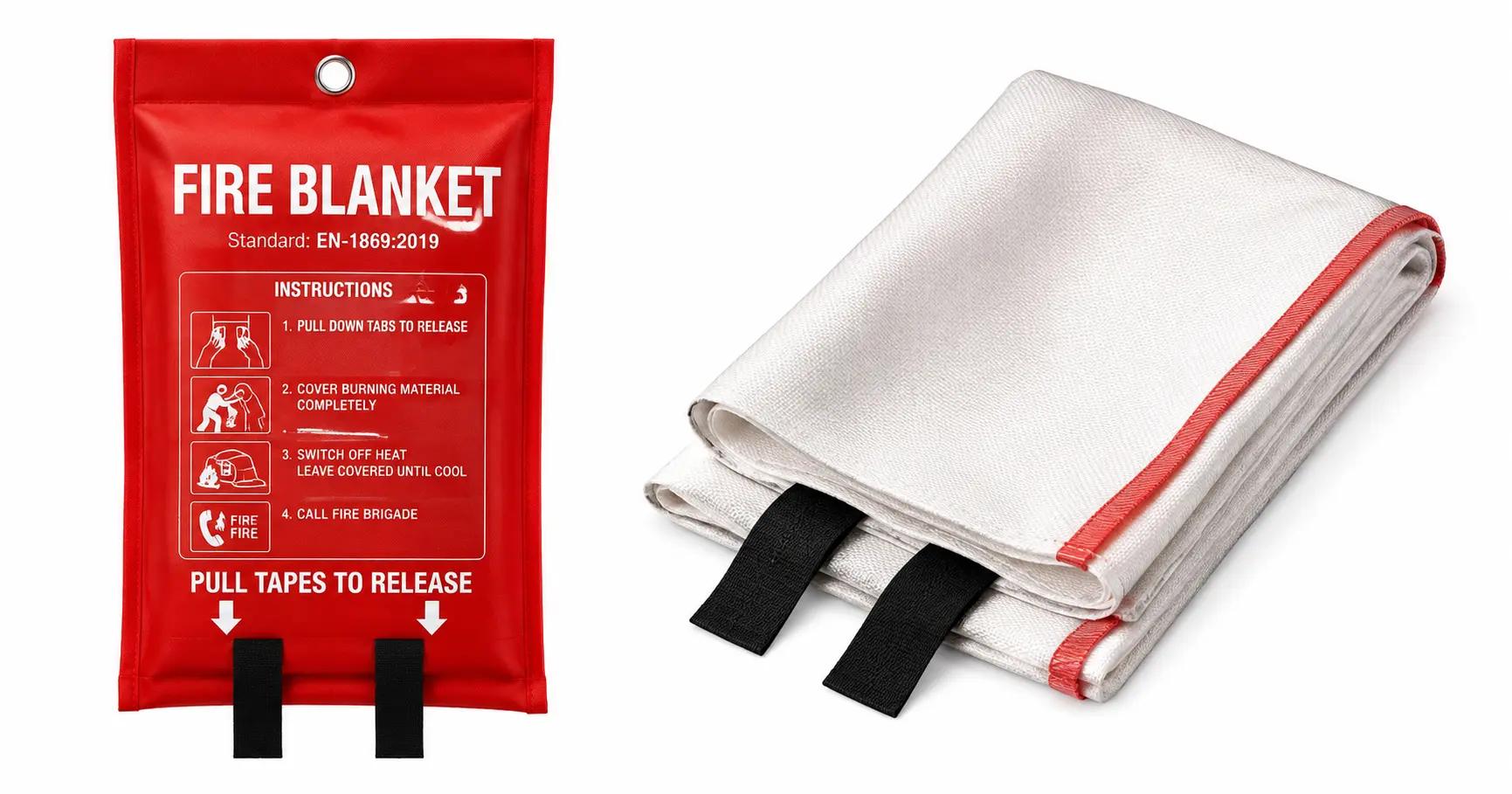
A fire blanket is a simple safety product made for dealing with certain small fires. Nobody thinks about fire safety until the day it actually matters — a pan catches fire, panic sets in, and water gets thrown on it before anyone realizes that’s the worst possible move with an oil fire. Cooking fires hit U.S. homes at an average of 158,400 a year between 2017 and 2021, according to NFPA data.
A fire blanket sitting within reach could've stopped a good number of those before they turned serious. This guide covers what a fire blanket actually is, how it works, and exactly when to use one.
What Is a Fire Blanket?
Most people don’t think about fire safety until the day their pan actually catches fire — usually right after they’ve stepped away for a minute. It happens more than people admit.
Water is usually the first thing people reach for in that panic, and it's the worst possible move with an oil fire — it can cause the burning oil to splatter and spread instead of putting it out. At its core, a fire blanket is fire-resistant fabric designed to smother flames by cutting off their air supply. There's no chemical spray involved and no extinguishing-agent residue left behind. Understanding how to use a fire blanket correctly can help you respond quickly to a small, manageable fire and use this simple safety tool more effectively.
Most homes that have one keep it folded in a little pouch mounted somewhere in the kitchen, with a couple of tabs you pull to release it quickly when things go wrong.You might think any heavy blanket would work just as well. It doesn’t. It wouldn’t. A regular blanket is built to trap heat inside — put it near an open flame and it’ll catch fire itself within seconds, which obviously makes things worse, not better.
The Science Behind a Fire Blanket
The science here isn’t complicated. Every fire needs three things to keep going — heat, fuel, and oxygen. Cut off any one of those and the fire dies. A fire blanket goes after the oxygen, which is usually the easiest of the three to remove quickly.
Once you lay it over a flame, it seals that fire off from the air around it. Same logic as slapping a lid on a pot when oil starts flaring up on the stove. You’re not really “fighting” the fire in the traditional sense — you’re just starving it of what it needs.
What actually happens when you use one:
You place the blanket completely over the flames, covering every edge.
You leave it there until things cool down completely, otherwise the fire can start right back up the moment fresh air reaches it.
It’s basically the boiling-pot-lid trick, scaled up to handle an actual fire. And timing matters a lot here — this works great on a small, contained fire that hasn’t had time to spread.
Types of Fire Blankets
When buying, check for certifications — EN 1869 (European standard) or BS 6575 (British standard) are the ones worth looking for. All this really means is the blanket has actually been tested under real fire conditions, not just labeled “fire-resistant” on the box with nothing to back it up. Same idea as checking a car seat’s actual crash test rating instead of trusting the marketing copy on the packaging.
When and Where to Use a Fire Blanket
Kitchen is the most common spot, hands down — especially for oil and grease fires where water would only make things worse by spreading the flames further across the stove or counter. If a pan catches fire, you slide the blanket over it (never throw it from a distance) and leave it in place until everything’s cooled off, usually several minutes.
They’re also made to wrap around a person if their clothes catch fire. You wrap it around the body, not the face, to smother the flames while keeping them still and calm — panic and running around only fans the flames further.
It’s not just a kitchen thing either. People keep them in their cars for engine fires, on boats, inside RVs, in workplaces like labs and garages, and even in camping gear since open flames and portable stoves are pretty much part of that whole setup.
Lay it over the fire from the front — don’t toss it, that can fan the flames or splash hot oil around the room.
Turn off the heat source once you can safely reach it, such as the stove knob.
Leave the blanket there until everything’s fully cooled, which can take several minutes. Don’t lift it to check early — fresh air rushing in can reignite things instantly.
Fire Blanket vs Fire Extinguisher
| Feature | Fire Blanket | Fire Extinguisher |
|---|---|---|
| Best For | Small kitchen fires and clothing fires | Larger fires and different fire types |
| Ease of Use | Simple to use with basic safety guidance | Requires proper technique and basic training |
| Reusable | Usually for one-time use; replace after use | Some models can be refilled after use |
| Mess | Generally leaves no extinguishing-agent residue | May leave powder, foam, or other residue |
| Cost | Usually more affordable | Varies depending on type, size, and agent |
For a small, contained fire in the kitchen, a blanket is quicker and cleaner, with nothing to clean up afterward. A standard 1m x 1m blanket covers most home kitchens fine. Commercial kitchens or bigger fryers need something larger, closer to 1.2m x 1.8m, to fully smother a bigger flame.
Stick to a certified one — EN 1869 or whatever your country’s equivalent standard is. That’s the real difference between something actually tested against fire and something just labeled “flame retardant” with no proof behind it.
As for placement, keeping a Fire Blanket near the stove should be a priority, but not directly above it. You want to be able to reach the Fire Blanket quickly if the stove itself catches fire, rather than having to reach through flames to grab it. For extra coverage, consider keeping another Fire Blanket in the garage or near your vehicle. If you are looking for a reliable Fire Blanket Manufacturer in India, choose a supplier that provides properly specified fire safety products and clear usage guidance.
Maintenance, Shelf Life & Disposal
…it somewhere dry — moisture and grease buildup over time can mess with how well it performs when you actually need it in an emergency.
Watch for discoloration, fraying edges, or just it sitting untouched way past its listed shelf life — all signs it’s time for a new one.