
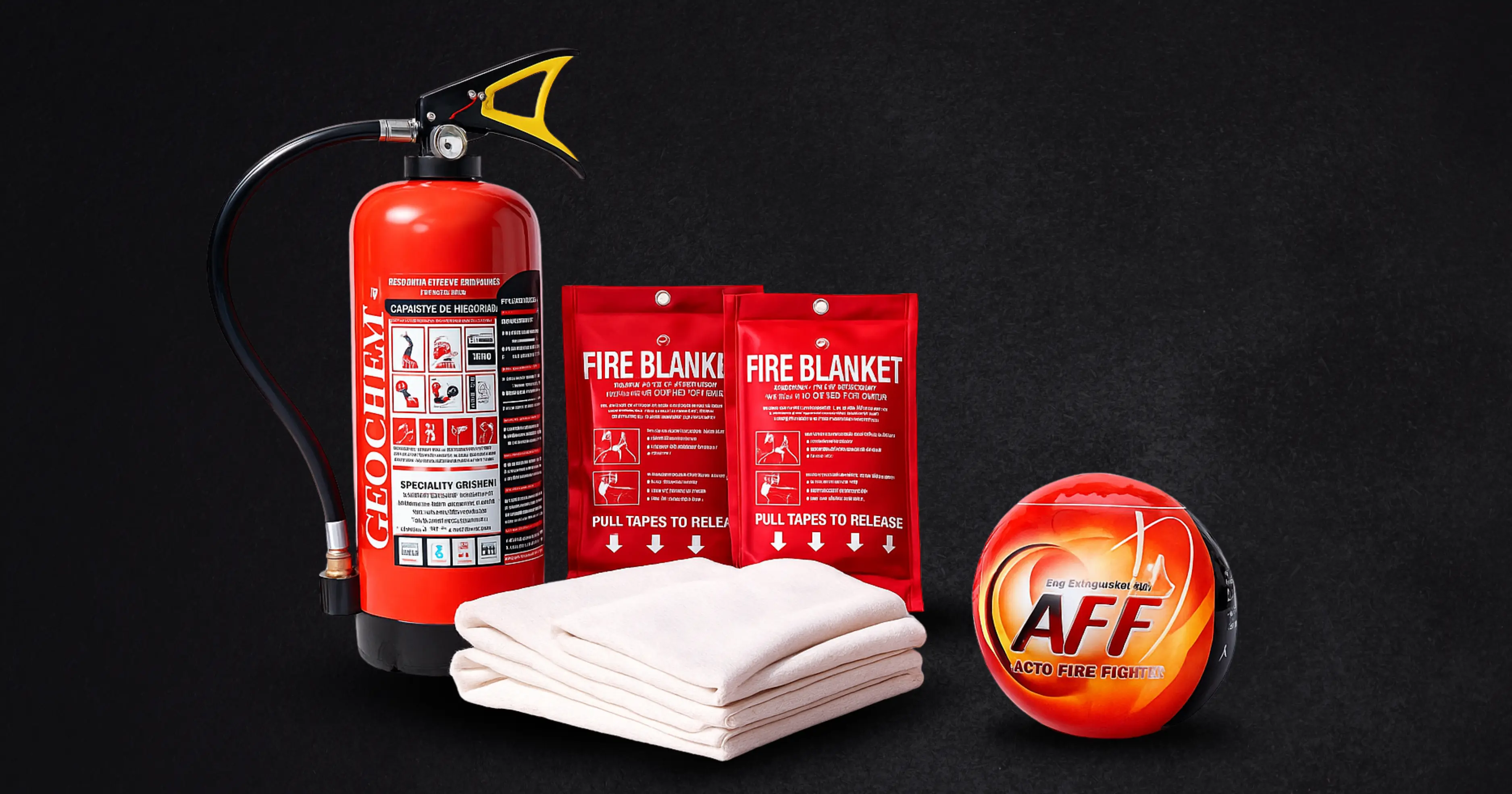
Let’s be real for a second. Nobody wakes up thinking “today I’ll research fire extinguishers.” You’re here because something happened, or almost happened. Maybe oil caught fire on the stove and everyone just froze. Maybe a friend told you a story that scared you a little. Either way — good, you’re here now.
Buying a fire extinguisher for home use sounds simple until you actually try to do it. Every shop has rows of red cylinders that all look the same. Ask the salesperson which one you need and half the time they’ll just point at whatever’s cheapest or whatever’s in stock. Nobody explains the actual difference. So here’s an attempt at that.
Why you need one in the first place
Fires at home rarely start big. That’s the part people forget. It’s oil left on the stove a minute too long. It’s that extension cord behind the TV that’s been sparking on and off for weeks and everyone just… ignored it. It’s a candle during a power cut, knocked over, nobody watching.
None of that sounds like a disaster while it’s happening. It only becomes one if nobody does anything in the first minute or so.
That’s really what home fire safety comes down to. Not some grand plan — just catching the small stuff before it turns into the big stuff. A home fire extinguisher won’t save a house that’s already fully on fire. That’s not what it’s for. It’s for that narrow window right at the start.
Things to actually think about before buying
Where’s the risk in your house, really? Kitchen has oil, gas, maybe a cylinder. Living room has wiring, curtains, a pile of laundry someone always leaves near the heater. Garage or store room — paint, tools, fuel, extension boards. Don’t just buy one extinguisher and assume it covers your whole house. It won’t.
Learn the fire extinguisher types. Boring, I know. But this is the part that actually matters and it’s the part everyone skips. Not every extinguisher works on every kind of fire. Some handle paper and wood. Some handle liquids. Some are for electrical stuff. Some are made specifically for cooking oil fires. Using the wrong type on the wrong fire doesn’t just fail — sometimes it makes things worse.
Check the rating, not the size. People walk in, see a bigger cylinder, assume bigger means safer. Or they see a higher price and assume that means better. Neither is really true. The rating printed on the label is the number that tells you what it can actually put out.
Think about who’s going to use it. Not you specifically — whoever’s actually home most. If it’s your mum, or your grandfather, or a kid old enough to grab it in an emergency — a massive, heavy extinguisher isn’t helpful if nobody can lift it off the wall when it matters. A smaller one someone can actually pick up beats a big one collecting dust.
Check the certification too. Look for proper labeling, standards info, manufacturer details. If a listing or a box is vague about all this — that’s not a great sign.
Okay but which one is actually best?
There isn’t one universal answer. Anyone telling you “this exact model, no questions asked” is skipping steps. It depends on what’s actually at risk in your home.
With that said — a lot of people end up going with an ABC fire extinguisher. Mainly because it covers a wide range of common household risks in one unit, so it’s a reasonable default if you’re not sure where to start. Still — don’t buy it just because it’s popular. Check the label. Make sure it actually matches your risks.
Different rooms need different things
Kitchen fires, especially oil and grease fires, don’t behave like normal fires. Don’t assume a general extinguisher handles a pan fire the same way it handles a paper fire. Check what it’s rated for before you rely on it.
Electrical equipment needs something specifically rated for that. And skip water completely here — it conducts electricity. Using it near live wiring can turn a small problem into something much worse.
Living rooms and bedrooms are usually just ordinary combustibles. Paper, fabric, furniture, wood. Nothing exotic, but plenty of it in every home.
Garages and store rooms are the messy one. Fuel, paint, tools, wiring, sometimes a spare gas cylinder. Honestly this space kind of deserves its own extinguisher instead of borrowing the kitchen one.
Where should it even go
Don’t hide it. That’s basically the whole rule. Keep it somewhere visible, somewhere you’d actually remember to grab in a panic — not stuffed in a cupboard behind old boxes. Don’t keep it inside the one room that’s most likely to catch fire either, because if that room fills with smoke, you’ve just lost access to the one thing that could’ve helped. And whatever you do — don’t let grabbing it block your own way out the door.
Using it — the PASS thing
Pull the pin. Aim at the base, not the flames. Squeeze the handle. Sweep side to side.
That’s it. But — and this actually matters — only try this if the fire’s still small, you’re confident enough to handle it, and there’s a clear way out if things go wrong. If you’re hesitating even a little, don’t try to be a hero. Just get out and call for help.
Mistakes people make constantly
Buying on price alone. Never checking the rating. Skipping certification because the packaging looked fine. Buying something too heavy for the person who’ll actually use it. Hiding it somewhere “safe” that’s really just inconvenient. Forgetting it exists until it’s already expired. Thinking one extinguisher magically covers every type of fire.
Maintenance — yeah, it needs that too
This isn’t a buy-once, forget-forever kind of thing. Every now and then, check it for damage or rust. Make sure the pin and seal look untouched. If there’s a pressure gauge, glance at it. Check the hose isn’t cracked. Make sure the label’s still readable. Follow whatever servicing schedule the manufacturer gives you — don’t just wing it.
How many do you actually need
There’s no fixed number, no matter what a salesperson tells you to sell more units. It depends on the size of your home, the layout, what risks exist in different areas, and how easily each one can be reached. A small flat and a three-storey house with a garage obviously don’t need the same setup.
Quick checklist before you buy
Matches your home’s actual fire risks. Size someone can realistically lift. Rating clearly visible on the label. Proper certification included. Easy enough for your household to use. Clear instructions in the box. A sensible spot to keep it. Manufacturer and servicing info you can actually find.
Last bit
Choosing the right fire extinguisher for home use isn’t complicated once you strip away the sales talk. Be honest about your home’s risks. Check the rating, not the price sticker. Make sure whoever’s around can actually use it. And remember — it’s one piece of a bigger picture, not the whole plan. Pair it with basic prevention, a smoke alarm if it makes sense for your place, some rough idea of how everyone gets out, and a bit of regular checking. That’s really it.
FAQ
What is the best fire extinguisher for home use? Depends on your home’s risks — there’s no single universal answer. ABC extinguishers are a common, practical default for most households.
Is an ABC fire extinguisher suitable for a home? Usually, yes. It covers a wide range of common risks. Still worth checking the label against your specific situation.
Where should I keep a fire extinguisher at home? Somewhere visible and easy to grab quickly — not buried away, and not blocking your own exit.
Can I use a fire extinguisher on an electrical fire? Only one rated for electrical fires specifically. Never water-based ones near live wiring.
Can I use a fire extinguisher on a kitchen fire? Only if it’s rated for it. Oil and grease fires need different handling than a regular fire.
How often should a home fire extinguisher be checked? Every so often — check the pressure gauge, seal, and general condition, and stick to the manufacturer’s servicing schedule.
How do I know which size fire extinguisher I need? Think about who’s actually going to use it. Something they can lift and operate confidently beats something bigger that’s too heavy in a panic.