grahakavach.in

Fire Safety Equipment Enquiry

Best Fire Extinguisher for Car: A Complete Automotive Fire Safety Guide
 

A vehicle fire can start unexpectedly because of electrical faults, fuel leaks, overheated components, or other mechanical problems. Having the best fire extinguisher for car safety can provide an important first line of protection when a small fire occurs. A car fire extinguisher should be compact enough to store inside your vehicle while still providing suitable fire-fighting capability. Choosing the right automotive fire extinguisher is therefore an important part of vehicle safety. It can help you respond quickly to an early-stage fire before it spreads, giving you valuable time to move yourself and your passengers to a safe location. Keeping the extinguisher properly secured and easily accessible ensures it is ready when you need it most.
Fire Extinguisher for Home

Why Every Car Should Have a Fire Extinguisher

Cars contain several materials that can contribute to a fire, including fuel, engine fluids, electrical wiring, plastics, rubber and upholstery. A small fire can grow quickly if it is not addressed appropriately. Keeping a suitable fire extinguisher for your car allows you to respond to an early-stage fire when it is safe to do so.

Car Fire Safety Combo Kit with Fire Extinguisher

Electrical Faults

Car Fire Extinguisher Kit for Vehicle Safety

Fuel Leaks & Spillage

Vehicle Fire Safety Kit with Fire Safety Accessories

Engine Overheating

Car Safety Combo Kit for Emergency Fire Protection

Rubber & Plastic Materials

Automotive Fire Safety Kit for Cars

Interior Material Fires

Complete Car Fire Safety Combo Kit

Roadside Emergencies

What Is the Best Fire Extinguisher for Car Safety?

1. Suitable Fire Rating

Choose an extinguisher with a fire rating suitable for common vehicle hazards, including combustible materials, flammable liquids, and electrical-related fire risks.

2. Compact & Portable Design

A compact automotive fire extinguisher is easier to store inside your car while taking up minimal space and remaining convenient to carry during an emergency.

3. Easy to Operate

Look for a model with simple operating instructions, an accessible handle, and an easy-to-use design so you can respond quickly during an early-stage fire.

4. Reliable Build Quality

Choose a well-constructed extinguisher made from durable materials that can handle regular vehicle use and provide dependable performance when properly maintained.

5. Secure Storage & Mounting

The extinguisher should be firmly secured with a suitable holder to prevent movement while driving and remain easily accessible whenever an emergency occurs.

6. Certified & Trusted Product

Always check the product's certification, fire rating, manufacturing information, and maintenance requirements to ensure you are choosing a reliable car fire extinguisher.

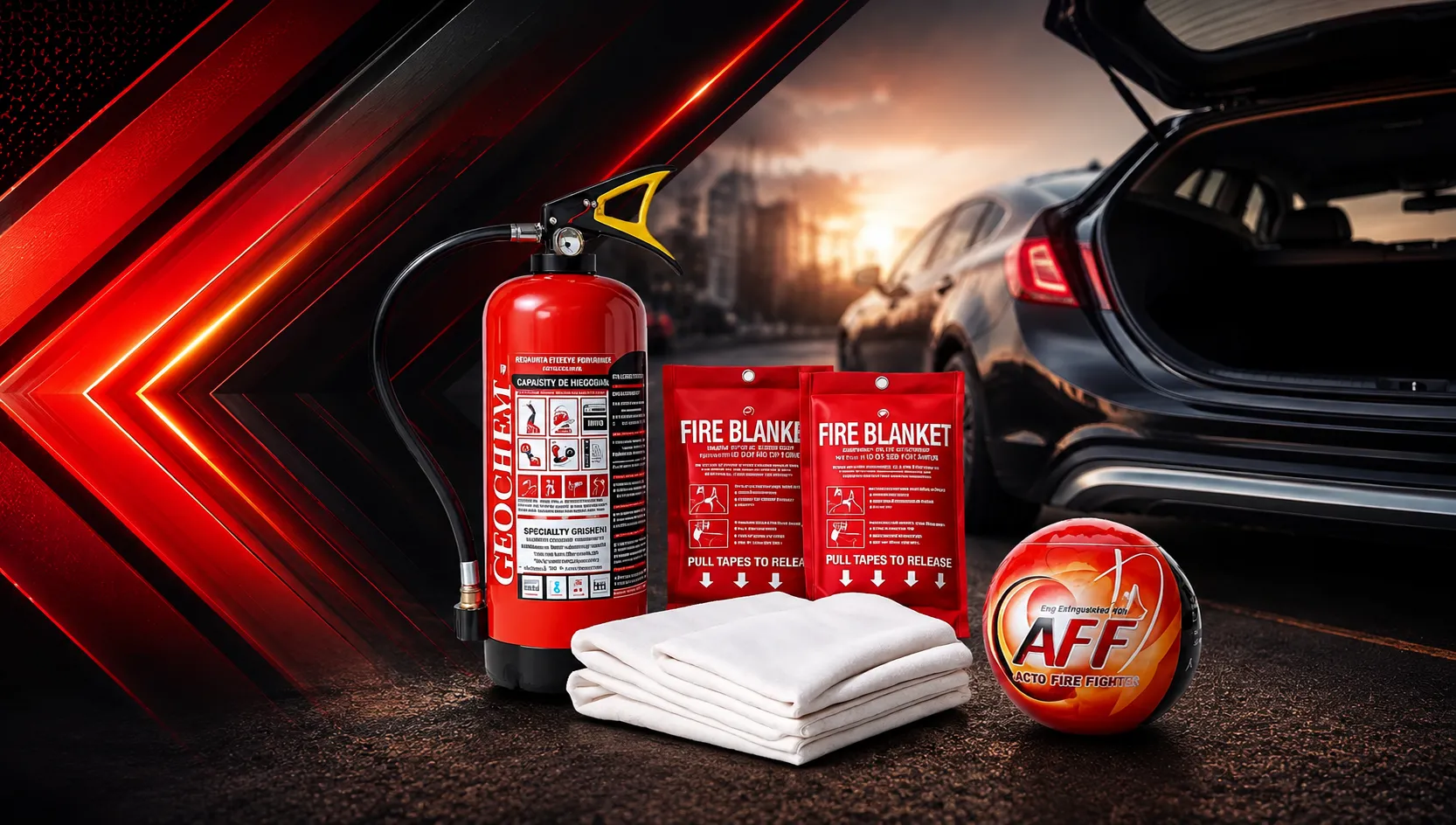
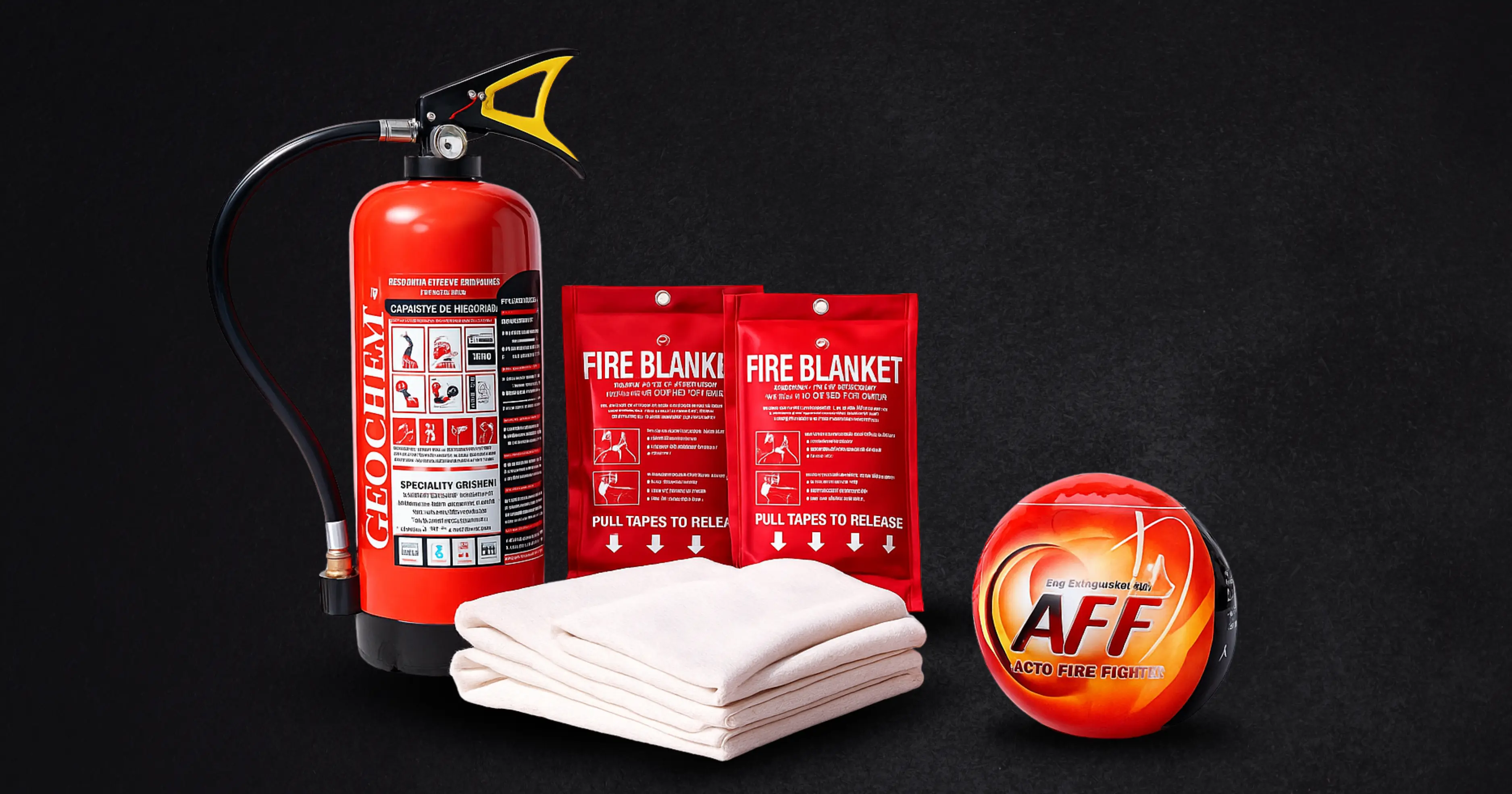
What Inside Our Fire Safety Combo ?

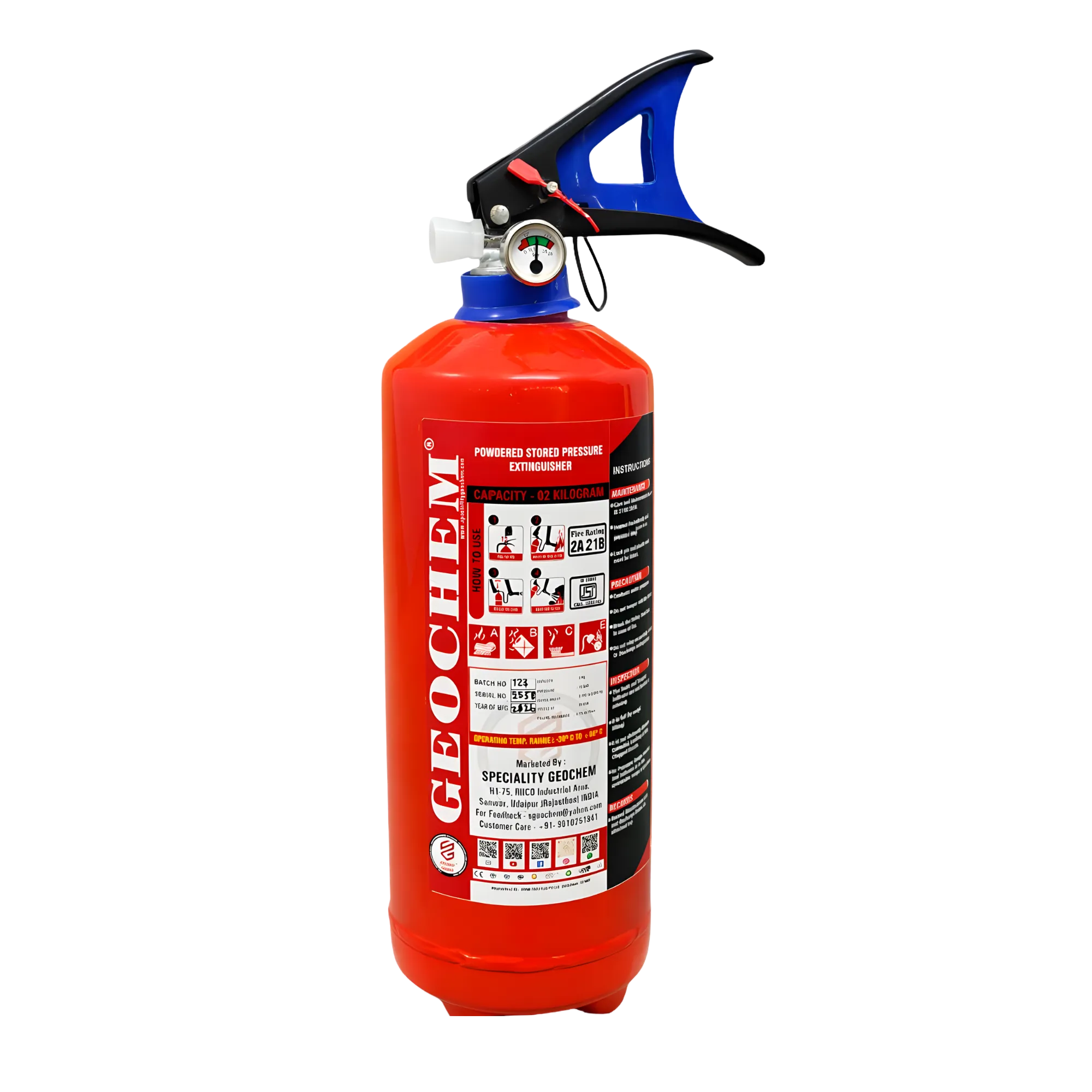
FIRE EXTIGUSHER CYLINDER

ABC Fire Extinguisher

  • Multipurpose fire protection
  • Suitable for Class A, B & C fires
  • Easy to use and maintain
  • Compact and convenient design
  • Reliable solution for common fire risks
AFF FIRE BALL

AFF Fire Ball

  • Automatic fire-extinguishing solution
  • Designed to activate when exposed to fire
  • Suitable for engine bays and enclosed spaces
  • Compact and easy to place
  • Helps provide an additional layer of fire protection
Fire Blanket for Workplace Safety

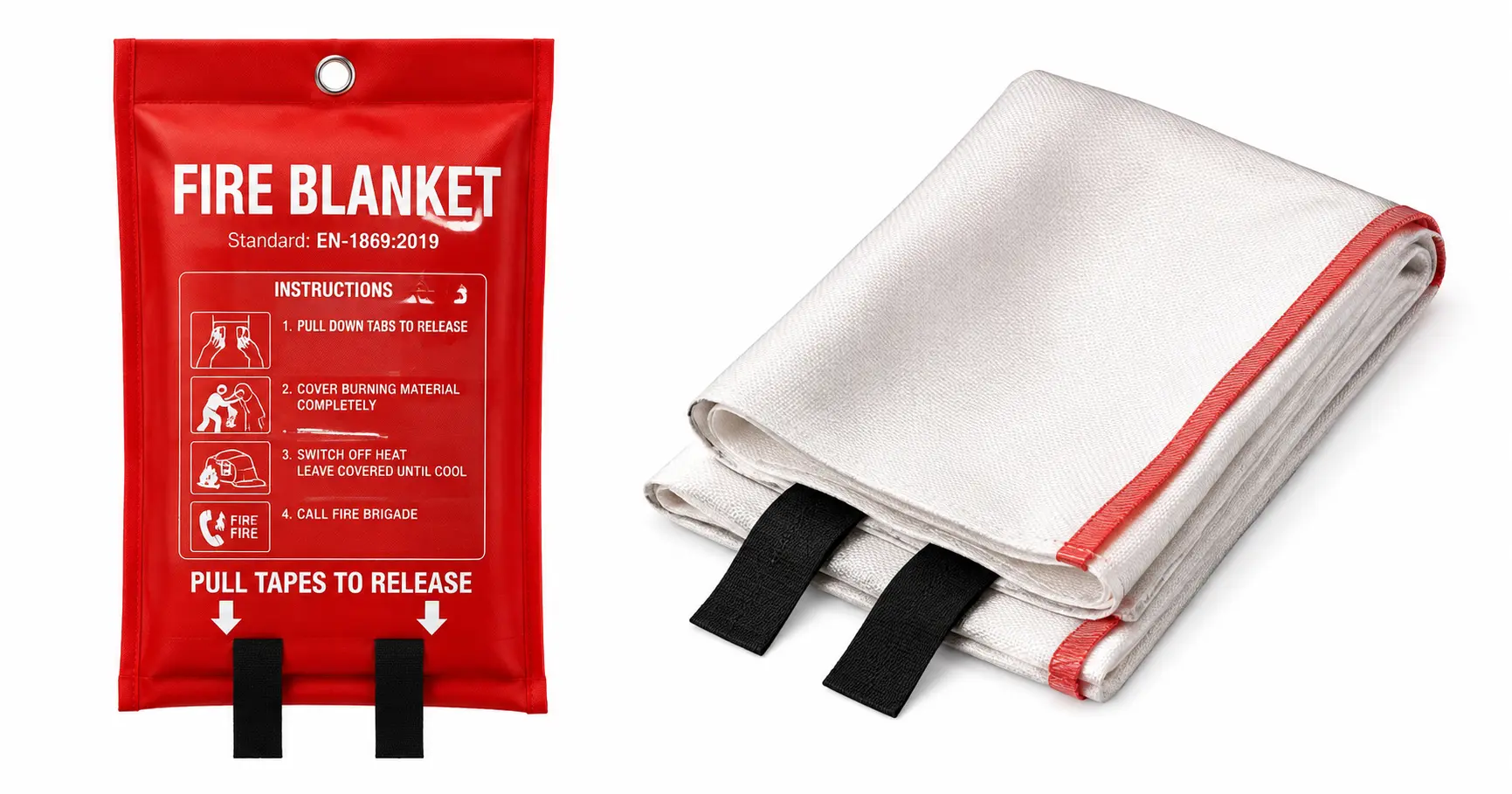
Fire Blanket

  • Made with high-quality fire-resistant material
  • Suitable for containing small fires
  • Useful for kitchen, electrical, and cooking-related fire risks
  • Easy to use in an emergency
  • Simple pull, cover, and smother action


Automotive Fire Extinguisher: What Should You Look For?

An automotive fire extinguisher should be selected specifically with vehicle conditions in mind. Here are the main features to consider before choosing one.

📦

Compact Design

Easy to store without occupying excessive cabin or boot space, making it practical for everyday vehicle use.

🔥

Appropriate Fire Rating

Choose a product with a fire rating suitable for the types of fire risks you may encounter in your vehicle.

Simple Operation

Look for clear operating instructions and a straightforward design that can be understood during an emergency.

🔒

Secure Mounting

The extinguisher should remain firmly secured during normal driving while staying easy to access when needed.

Choose Smart. Select an automotive fire extinguisher that combines the right fire rating, compact design, simple operation, and secure storage.

```

Where Should You Keep a Car Fire Extinguisher?
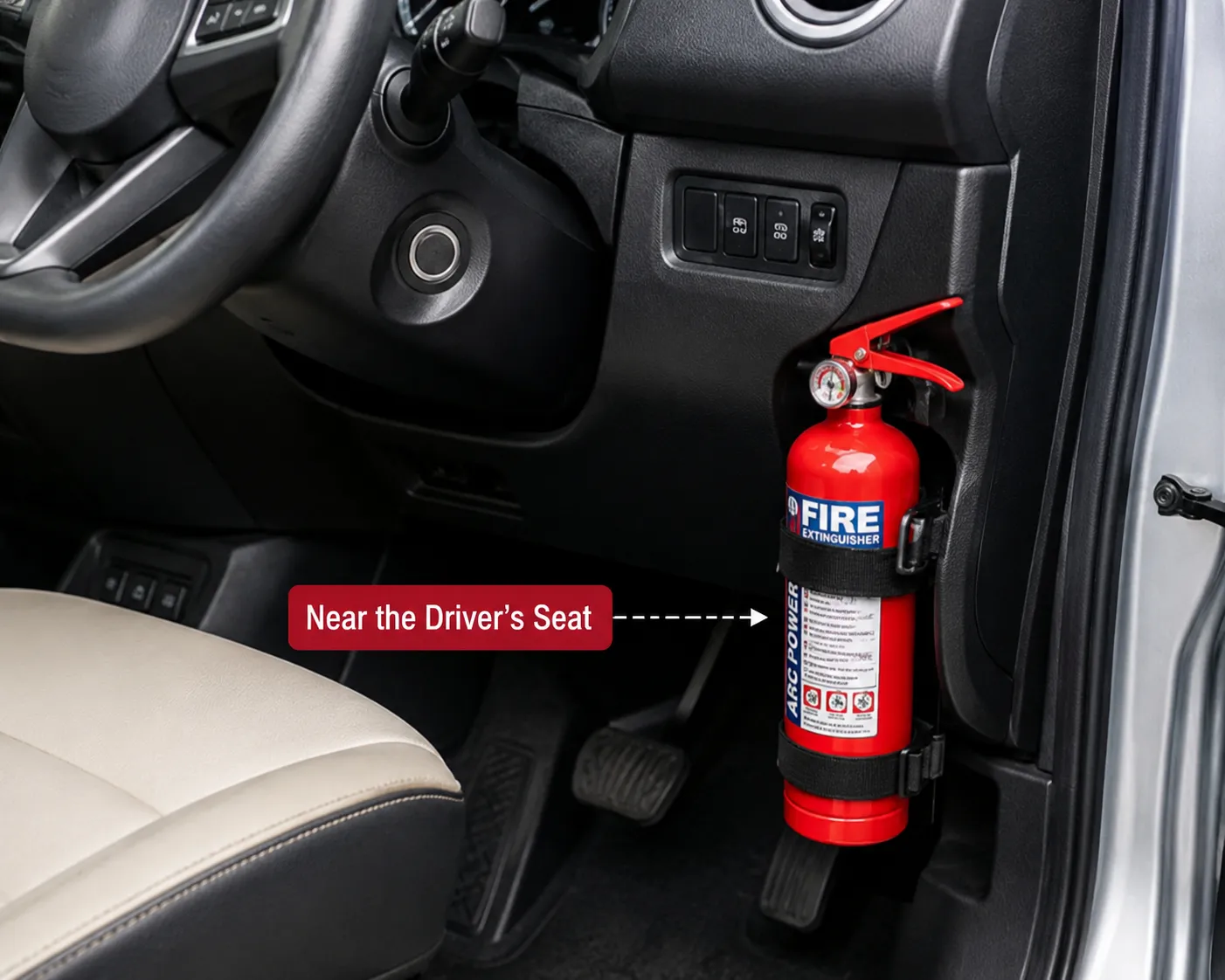
Car Fire Safety Equipment

1. Near the Driver’s Seat

A secure location near the driver’s seat can provide quick access during an emergency. Make sure the extinguisher does not block the pedals, steering controls, gear lever, or other essential driving functions.
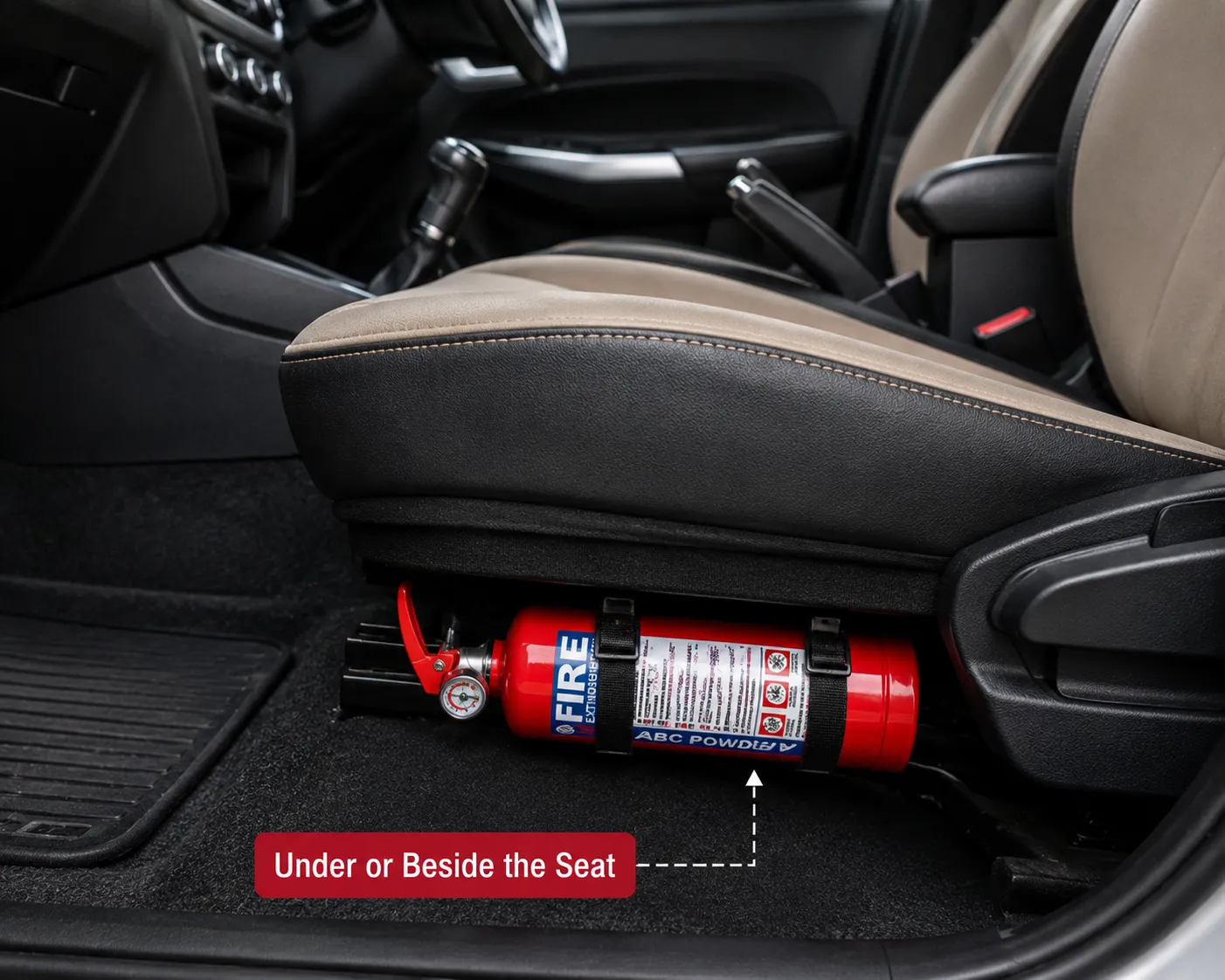
Fire Extinguisher for Car

2. Under or Beside the Seat

A suitable holder under or beside the seat can keep a small automotive fire extinguisher within easy reach. It should be firmly secured and positioned so that it does not interfere with seat movement or passenger safety.
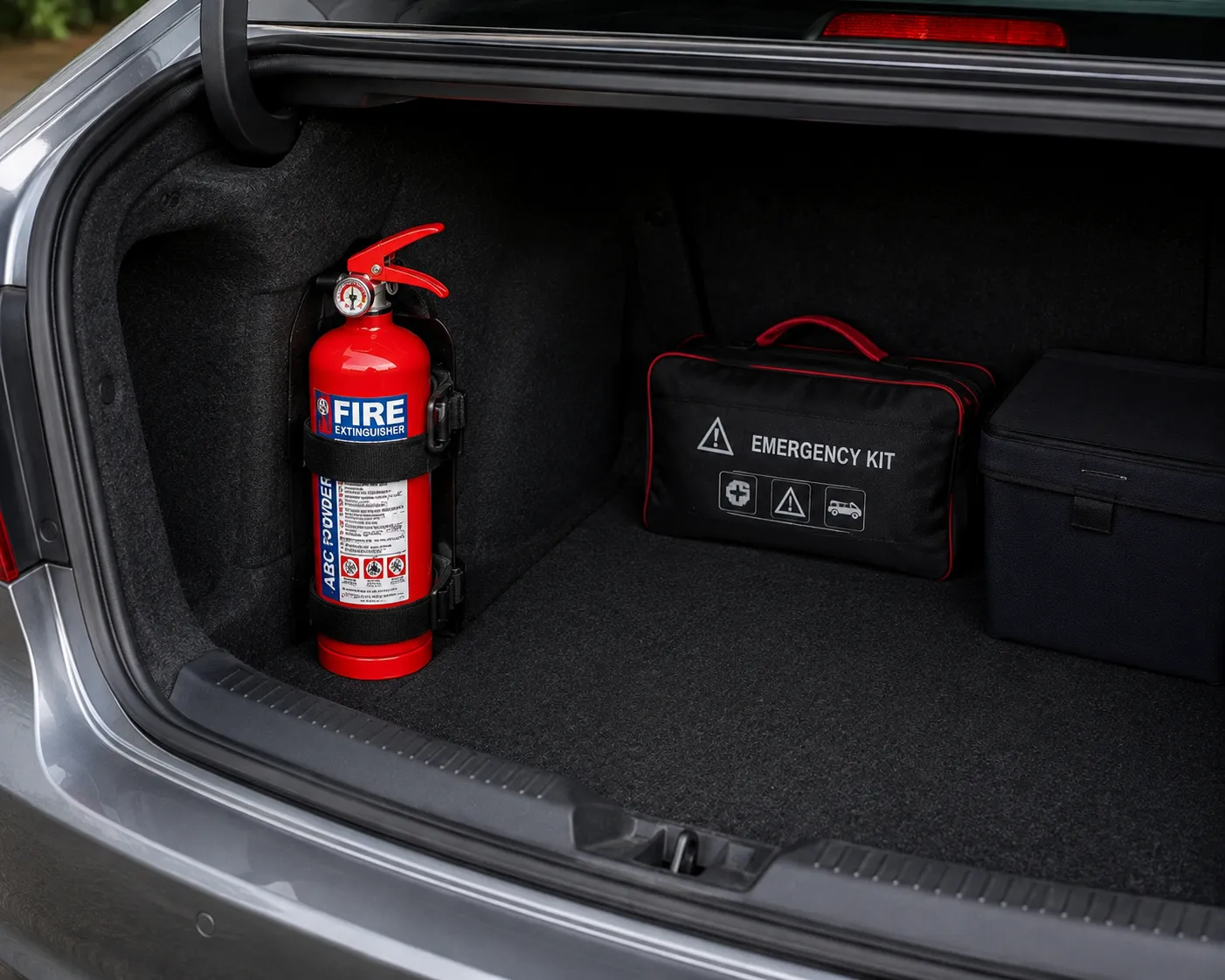
3. In the Boot

The boot can be a practical option when there is limited cabin space. Keep the extinguisher visible and easy to access, rather than underneath heavy luggage or stored items that could delay access during an emergency.
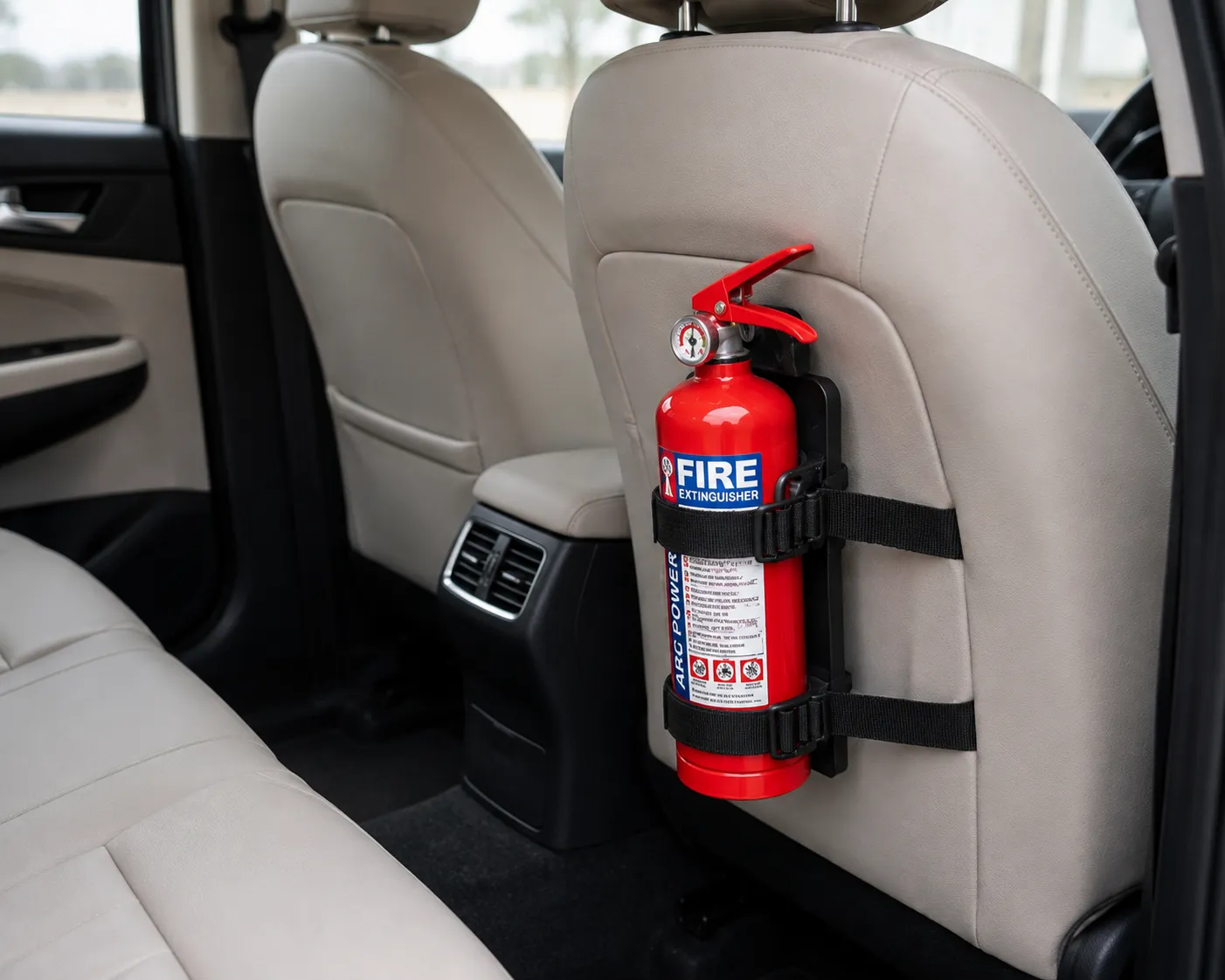
Vehicle Fire Protection

5. Behind the Front Seat

A properly fitted mounting bracket behind the front seat can provide a convenient location for passengers to access the extinguisher. Ensure it is securely attached and does not obstruct passenger movement

FAQ

1. What is the best fire extinguisher for a car?

The best fire extinguisher for a car is one that is suitable for the types of fire risks commonly found in vehicles, while also being compact, easy to operate, securely mountable, and appropriately certified. Cars can contain several potential fire hazards, including electrical wiring, fuel, oils, plastics, rubber, and interior materials.Rather than choosing an extinguisher based only on its size or price, check its fire rating, capacity, certification, operating instructions, and intended application. A compact multipurpose extinguisher may be a practical option for many vehicles, but always follow the manufacturer's specifications.

A vehicle fire can develop unexpectedly because of an electrical fault, fuel leak, overheating component, accident, or mechanical problem. Having a suitable automotive fire extinguisher provides an additional layer of preparedness for an appropriate early-stage fire.It can help you respond quickly if a small fire is detected and it is safe to use the extinguisher. However, a portable extinguisher is not a substitute for emergency services. If the fire is spreading rapidly or producing heavy smoke, evacuate the vehicle and move to a safe location.

The suitable type depends on the fire classes it is certified to handle and the specific hazards present in the vehicle. Vehicle fires may involve combustible materials, flammable liquids, and electrical components.A multipurpose extinguisher may cover several common fire classes, but you should always check the product label and manufacturer's specifications before purchasing. Do not assume that every extinguisher is suitable for every type of vehicle fire.

A small fire extinguisher for car use can be convenient because it takes up less space and is generally easier to handle. This makes a compact design attractive for passenger cars where storage space may be limited.However, smaller does not automatically mean better. You should also consider the extinguisher's fire rating, capacity, quality, certification, and intended use. Choose a size that provides appropriate protection without becoming difficult to store or handle.

The extinguisher should be kept in a location that is easy to reach and securely mounted. Possible locations may include near the driver's seat, under or beside a seat, behind a front seat, or in the boot, depending on the vehicle.Avoid placing it underneath heavy luggage or loose items. It should also never interfere with pedals, steering controls, seat movement, airbags, or other safety systems.

Yes, the boot can be a practical storage location, particularly when cabin space is limited. However, accessibility is important.Do not place the extinguisher underneath luggage or equipment that could prevent you from reaching it quickly. Use a suitable holder or mounting system to prevent the extinguisher from moving around while the vehicle is being driven.

Yes. A fire extinguisher should be securely mounted or restrained rather than left loose inside the vehicle. A loose cylinder can move around during sudden braking, sharp turns, or a collision.A suitable mounting bracket can help keep the extinguisher in position while making it easier to access when required. Always follow the manufacturer's mounting instructions.

It may be possible if the extinguisher and mounting arrangement are specifically suitable for that location. However, it must not interfere with pedals, seat movement, electrical components, airbags, or other vehicle controls.The extinguisher should be firmly secured and should not be able to slide forward while driving. If the location creates any safety concern, choose another accessible mounting position.

Vehicle fires can have several causes. Common risks include electrical faults, damaged wiring, fuel leaks, oil leaks, overheating components, mechanical failures, collisions, and problems with aftermarket electrical equipment.Regular vehicle maintenance can help identify some potential problems before they become serious. Drivers should also pay attention to warning signs such as unusual smells, smoke, fluid leaks, overheating, or electrical problems.

A suitable extinguisher may be useful for an appropriate early-stage engine fire, but attempting to fight an engine fire can be dangerous. Opening the hood fully may introduce additional oxygen and increase the fire.If you encounter an engine fire, prioritize getting everyone out of the vehicle and moving away from the fire. Only attempt to use an extinguisher if the fire is small, you have a clear escape route, and you can do so without putting yourself at risk.

Only use an extinguisher that is specifically rated for the relevant electrical fire risk and follow its instructions. Never assume that every fire extinguisher is appropriate for energized electrical equipment.If you are uncertain about the extinguisher or the situation is becoming dangerous, move away from the vehicle and seek professional assistance rather than taking unnecessary risks.

Start by considering the vehicle's available storage space and the extinguisher's certified fire rating. A compact extinguisher may be easier to carry and store, but it should still provide an appropriate level of protection for its intended use.Look at capacity, fire rating, dimensions, weight, operating mechanism, certification, and mounting options rather than choosing based on size alone.

Before purchasing, check: Fire classification and rating Extinguishing agent Capacity and weight Product certification Manufacturing information Operating instructions Maintenance requirements Mounting options Intended applicationA reliable product should have clear labeling and sufficient information to help you understand how and where it is intended to be used.

Follow the manufacturer's inspection and maintenance instructions. Regularly check for visible damage, corrosion, leakage, blocked components, or other conditions specified by the manufacturer.If the extinguisher has a pressure indicator, check it according to the product instructions. Do not use a damaged or improperly maintained extinguisher simply because it appears to be intact.

Vehicle interiors can become extremely hot, so it is important to follow the extinguisher manufacturer's temperature-storage specifications.Do not assume every extinguisher is suitable for prolonged exposure to extreme temperatures. Check the product documentation for its permitted storage conditions and inspect it regularly for signs of damage.

Scroll to Top